
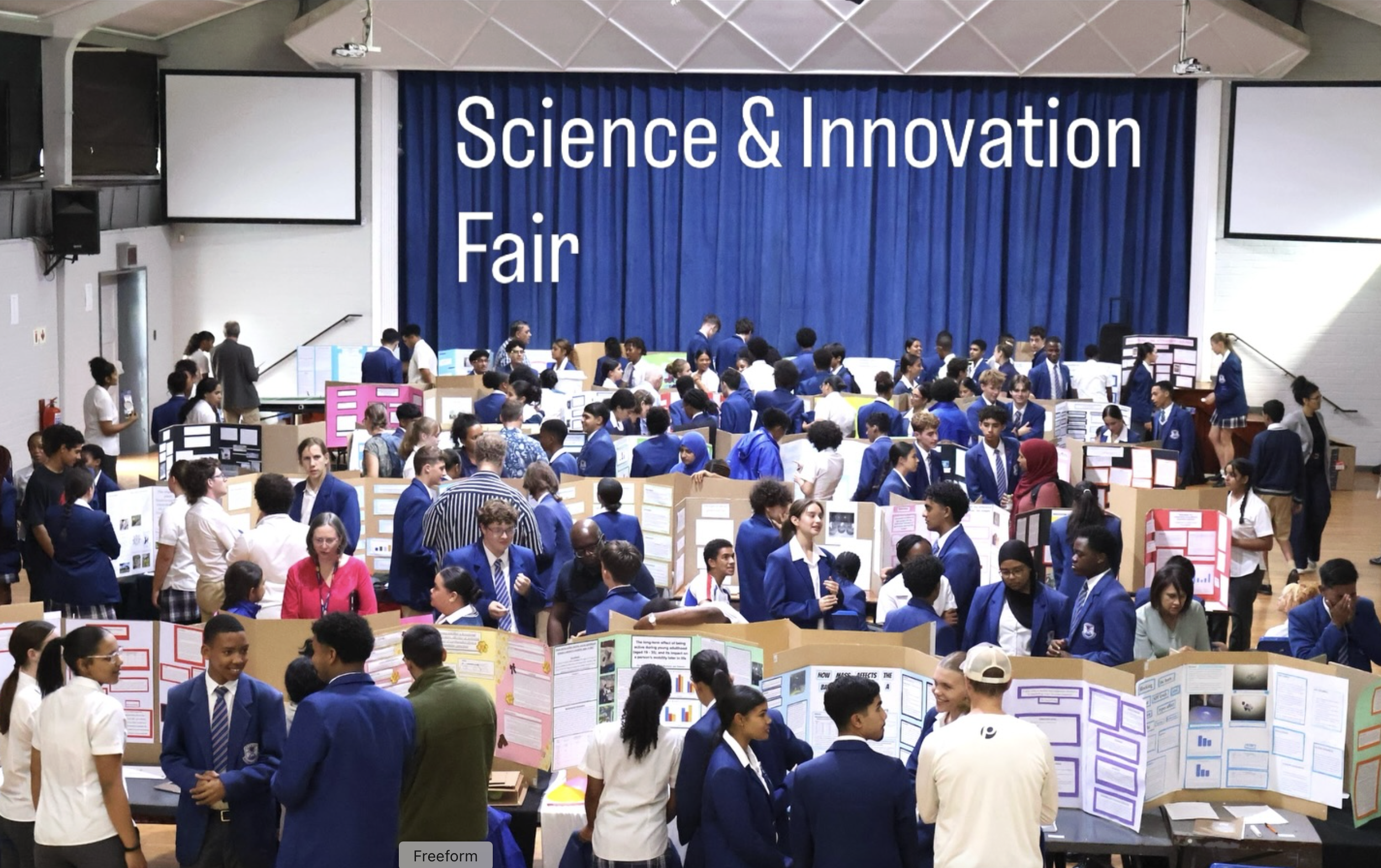
Pinelands High School held its annual Science and Innovation Fair on 14 April, showcasing more than 100 student projects.
The fair, which has been part of the school’s academic extension programme for more than 30 years, gives students the opportunity to engage meaningfully with the scientific method. All Grade 11 Science students take part, investigating a question, testing an idea or exploring a problem that interests them.
This year’s projects reflected an impressive range of topics and areas of interest. Some students focused on practical challenges such as road congestion, water safety, food spoilage and sustainable fuel. Others explored important social issues, including period poverty and misconceptions about ADHD. There were also projects linked to biodiversity, housing technology, health and everyday problem-solving.
The standard of work continues to improve each year, with students showing curiosity, creativity and a strong commitment to scientific thinking. We are grateful to the external team of industry experts who assisted with the marking and provided valuable feedback to the students. With a Grade 11 average of 75%, the competition was strong.
Congratulations to the thirteen Grade 11 projects, one Grade 9 project, and one combined Grade 10 and 12 project that were selected to progress to the Eskom Expo for Young Scientists at UCT.
The projects selected to progress to the next round are:
A movable clothing line activated by a rain sensor — Rania Mowzer and Ashleigh Parsons, Grade 11
Aqua Meets Algebra — Clare Farrell, Grade 10; Ameen Meltor, Grade 12
Assisting the solution to South Africa’s housing crisis by providing the software to 3D print houses — Nathan Broster-Masureik and Ewan Connan, Grade 11
Decreasing congestion on roads by improving road infrastructure in South Africa — Keyaan Bento and Mark Zanga, Grade 11
Designing and testing a low-cost, solar-powered ultrasonic early-warning system to detect rapid river-level rises and issue evacuation alerts — Kendra Matthysen and Ketso Ratele, Grade 11
Discrete panic button — Emily McChlery and Ethan Williams, Grade 11
From Fruit Bowls to Petri Dishes: Comparing Antioxidant Capacity — Alicia Tuffin and Esam Mjenxane, Grade 11
Putting an End to Period Poverty — Emily Richards and Tara Hendricks, Grade 11
Reconstructing Water-Based Astro Turf — Jenna Petersen and Kaleb October, Grade 11
Sustainable fuel production and fuel testing from waste tyres to reduce pollution — Uthmaan Razak and Huda Nacerodien, Grade 11
The effect of watching an ASMR video on the heart rate of people of different ages — Yaqeen Soeker and Jaime Mac Millan, Grade 11
The impact of plant biodiversity and ecosystem type on arthropod biodiversity in a suburban area in Cape Town — Alexandra de Roo, Grade 9
The incorporation of natural indicators in bioplastic to identify changes in pH caused by food spoilage — Ilhaam Isaacs and Tameeqa Booysen, Grade 11
Which Generation Has the Most Misconceptions, or the Least Accurate Information, About ADHD and Why? — Sarah Fortune and Zachary de Witt, Grade 11
Why Bacteria Should Wear Sunscreen: The Effect of UVC Exposure Time on Bacterial Survival — Liam Fransman and Camilla Beatty, Grade 11
We wish all the selected students well as they prepare for the next round of the Eskom Expo for Young Scientists.
The projects selected to progress to the next round are:
- A movable clothing line activated by a rain sensor — Rania Mowzer and Ashleigh Parsons, Grade 11.
- Aqua Meets Algebra — Clare Farrell, Grade 10; Ameen Meltor, Grade 12.
- Assisting the solution to South Africa’s housing crisis by providing the software to 3D print houses — Nathan Broster-Masureik and Ewan Connan, Grade 11.
- Decreasing congestion on roads by improving road infrastructure in South Africa — Keyaan Bento and Mark Zanga, Grade 11.
- Designing and testing a low-cost, solar-powered ultrasonic early-warning system to detect rapid river-level rises and issue evacuation alerts — Kendra Matthysen and Ketso Ratele, Grade 11.
- Discrete panic button — Emily McChlery and Ethan Williams, Grade 11.
- From Fruit Bowls to Petri Dishes: Comparing Antioxidant Capacity — Alicia Tuffin and Esam Mjenxane, Grade 11.
- Putting an End to Period Poverty — Emily Richards and Tara Hendricks, Grade 11.
- Reconstructing Water-Based Astro Turf — Jenna Petersen and Kaleb October, Grade 11.
- Sustainable fuel production and fuel testing from waste tyres to reduce pollution — Uthmaan Razak and Huda Nacerodien, Grade 11.
- The effect of watching an ASMR video on the heart rate of people of different ages — Yaqeen Soeker and Jaime Mac Millan, Grade 11.
- The impact of plant biodiversity and ecosystem type on arthropod biodiversity in a suburban area in Cape Town — Alexandra de Roo, Grade 9.
- The incorporation of natural indicators in bioplastic to identify changes in pH caused by food spoilage — Ilhaam Isaacs and Tameeqa Booysen, Grade 11.
- Which Generation Has the Most Misconceptions, or the Least Accurate Information, About ADHD and Why? — Sarah Fortune and Zachary de Witt, Grade 11.
- Why Bacteria Should Wear Sunscreen: The Effect of UVC Exposure Time on Bacterial Survival — Liam Fransman and Camilla Beatty, Grade 11.
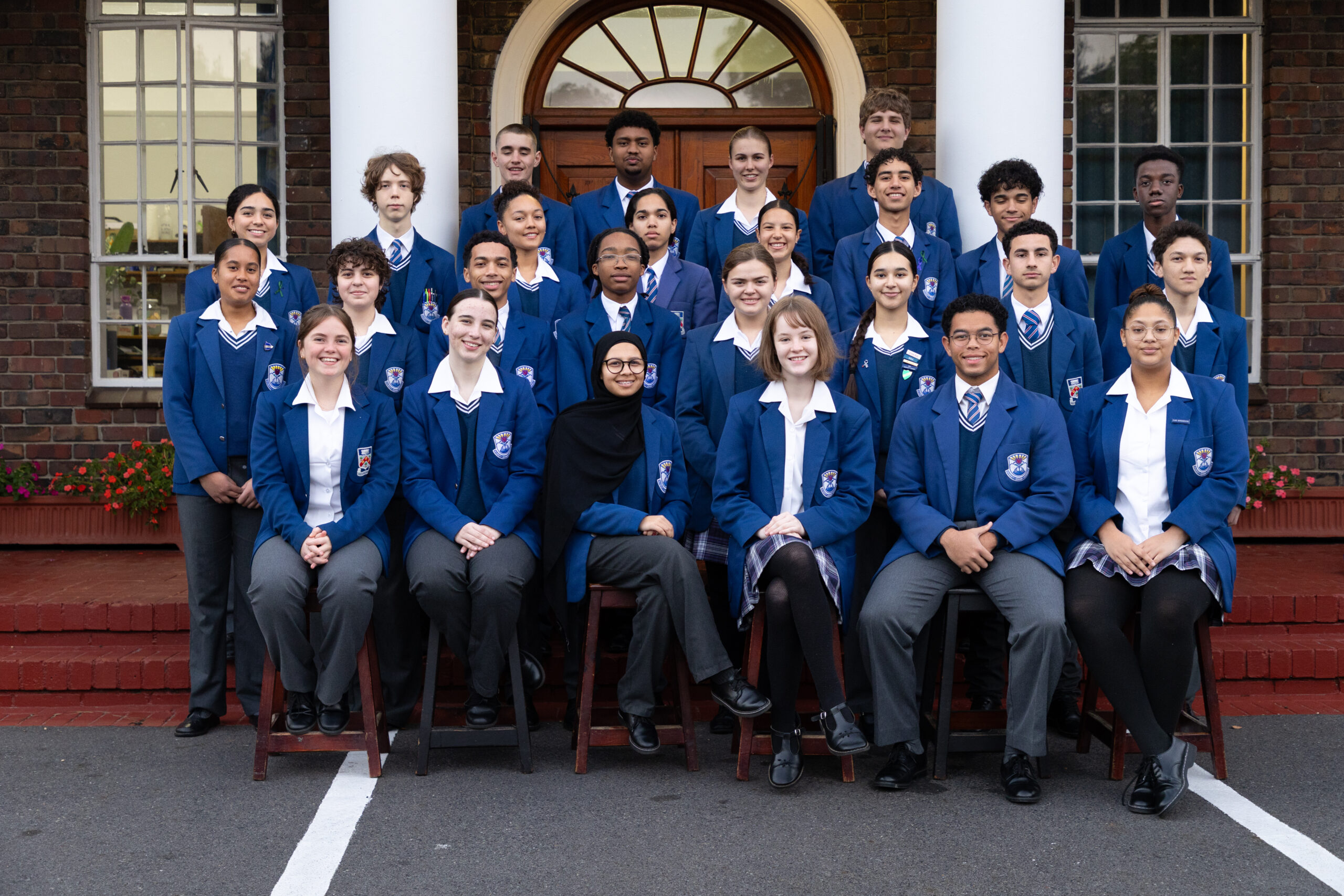
Photo caption: Students progressing to the Eskom Expo for Young Scientiests
Front: Camilla Beatty, Emily McChlery, Emily McChlery, Huda Nacerodien, Clare Farrell, Kaleb October, Tara Hendricks
2nd row: Jenna Petersen, Alicia Tuffin, Yaqeen Soeker, Ketso Ratele, Alexandra de Roo, Rania Mowzer, Jaime Mac Millan, Keyaan Bento
3rd row: Kendra Matthysen, Ewan Connan, Emily Richards, Ameen Meltor, Sarah Fortuine, Uthmaan Razak, Liam Fransman, Mark Zanga
Back row: Zachary de Witt, Ethan Williams, Ashleigh Parsons, Nathan Broster-Masureik
Absent: Esam Mjenxane, Ilhaam Isaccs, Tameeqa Booysen